

Ethics and Technology
Ethics and Technology
Innovations in communication and technology drive productivity, yet result in emerging ethical issues that are not immediately evident to managers. Technological innovations such the internet and mobile phones have become an essential part of the workplace, changed the tasks of the workforce, and created unanticipated ethical challenges.
The Daniels Fund Ethics Initiative Collegiate Program at UCCS COB has programmed events and sponsored research that look into the ethical issues brought about by advancements in technology and communications.
Ethics Fellows in this Focus Area


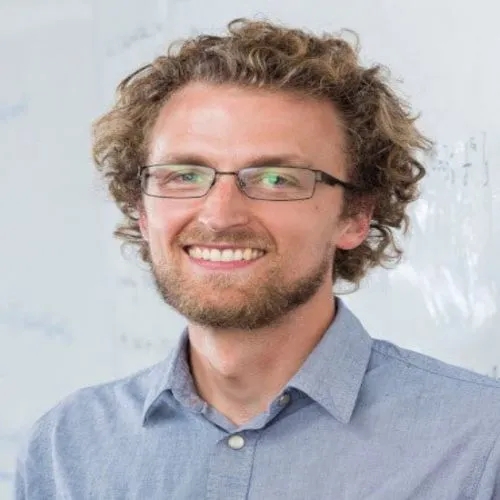
Assistant Professor of Computer Science, College of Engineering and Applied Science
Assistant Professor Computer Science, College of Engineering and Applied Science

Assistant professor of mechanical and aerospace engineering, College of Engineering and Applied Scienc

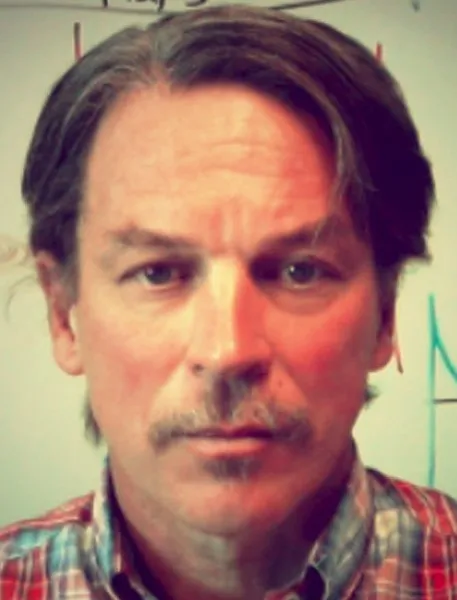
Program Officer of UCCS’s College of Engineering’s Computer Science Master's Department


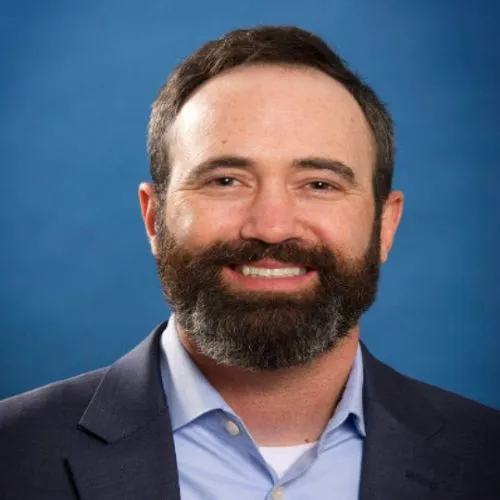

Professor Department of Computer Science, College of Engineering and Applied Science


Albert Batten, Ph.D.


Professor of Digital Strategy & Marketing; Team Lead of Marketing, Strategy, and International Business

Peggy Beranek, Ph.D.

Ethics and Technology Video
Related Resources
Should BlackBerry have provided countries access to its encryption system? View Full Article: Blackberry's Encryption System
Is Facebook violating user privacy with its new policy changes as a result of going public? View Full Article: Facebook: A Change for the Good or Hanging Users Out to Dry?
The Virtues of Leonhard Euler:
Ethics, Mathematics and Thriving in a Digital Era
By SCEC Champion Bruce N. Lundberg
This essay explores ethical foundations for meeting the digital challenge via a case study of the work, life, and virtues of the greatest mathematician and natural scientist of the eighteenth century, Leonhard Euler. By biography and history one can learn of the gifts of human strength, practices, good will, dependence on others, and friendships which made possible Euler’s own astonishing corpus of work and that of many other scientists, mathematicians, engineers, and technologists. Digital technology results from a combination of science (demonstrable knowledge and method), technology, engineering, and art (forms and artifacts of making and expressing), and mathematics (abstract numerical, algebraic, geometrical, formal, and digital concepts, rules, representations, and logics). Joint reflection on the biographical, historical, and natural sources of mathematics and the digital is essential for any humanization or ascesis in response to the perils and promises of digital technology for human thriving. As ethics enable and embody an ethos, so technologies are means and manifestations of a telos. Thus, thought and action for thriving through the digital needs to contemplate and conciliate the ends of humans and of the digital.
The April 2018 Ethics Roundtable featured Ethics Fellow Yanyan Zhuang, Ph.D., and her presentation "Creepy and Invisible: Learning Privacy and Censorship in Classrooms".
View the YouTube Presentation
The December 2019 Ethics Roundtable featured Ethics Fellow Katie Sullivan, Ph.D., and her presentation "The words you Tweet become the house you live in: Exploring social media ethics as a means of training wholehearted communicators".
View the YouTube Presentation or the Presentation PowerPoint
UCCS has adopted a set of values to which it is committed, including specifically a commitment to the value of integrity and an expectation that each member of the campus community will engage in ethical behavior.